
Extreme Shortage!
Get Later Orchardgrass CTD for $3.19 per Pound
The highest-yielding grass—we sell more of this than any other grass combined!
This can out-yield alfalfa!
If you’re irrigated and want HUGE production, this is your grass!
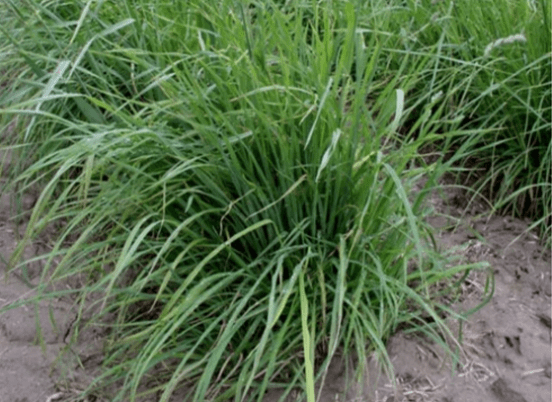
Later Orchardgrass is a perennial, cool-season bunchgrass best suited for fertile, light to medium soils with good drainage, although it can grow on moderately drained soils as well. It is a fantastic choice for pasture, hay, silage, or greenchop. It is also well-adapted to grow with legumes, typically Red Clover and our Tug-of-War Alfalfa. Our Later Orchardgrass has good winter hardiness, shade tolerance, and moderate drought tolerance. Later has a heading date more similar to alfalfa and is used in many mixes.
- Planting Depth: 0.25” to 0.50”
- Planting Rates: 25 to 30 Pounds per Acre, 20 to 25 Pounds per Acre If Used in Range or Critical Area Treatment. Cut Rates by 5 to 10 Pounds per Acre If in Mixes.
- Planting Dates: March to May, September to October
Product ships in a 50-pound bag.
Establishment
Orchardgrass can be planted either in early spring or late summer, depending on the area of the country. It is suited for light to medium soils with good drainage and is typically established with drill or broadcast seeding. Seeding should be done in a firm seedbed. Rolling after seeding ensures even germination and emergence.
If used for range and erosion control, seeding should be done in late fall or very early spring. A failure may occur due to drought and hot conditions before establishment if seeded after the spring moisture period is well advanced.
Adaptation
Orchardgrass is found all across the US. It is not as winter hardy as Smooth Brome or Timothy but performs well on different textured soils ranging from clay to gravelly loams and on shallow to deep soils. Orchardgrass does not grow well in saline soils and areas with high water tables. It has the ability to establish and persist in areas that receive as little as 11” of annual precipitation. It performs best in a pH range of 5.8 to 7.0.
Management
Orchardgrass is very responsive to fertilizer, and production can be excellent with proper fertility and split N applications. For the best first harvest yield and quality, orchardgrass should be harvested in the early-mid boot stage at a cutting height of 3” to 4” so it can recover quickly and persistence can be maintained.
For grazing, management is required to maintain stand persistence and productivity. Graze to 3” to 4” and rest for at least 28 days in between rotations. Rotational grazing is preferred for best production, persistence, and quality. Fields should be heavily grazed and frequently (every 10 to 12 days) during the rapid spring growth period, but make sure to avoid overgrazing.
Description
Dactylis glomerata L., Orchardgrass, is a persistent, cool-season bunchgrass. Under dry land conditions, distinct clumps and flower culms 15” to 18” tall usually develop. Leaves are usually less than 12” in height. When grown under irrigation or in more moist situations, it attains a height of 24” to 28”.
No vegetative spread has been observed. Orchardgrass is one of the earliest species to grow in the spring, making tremendous growth during cool conditions. Due to its deep roots, it is also capable of strong summer growth when conditions are favorable. Orchardgrass has 416,000 seeds per pound.
Reviews
There are no reviews yet.