
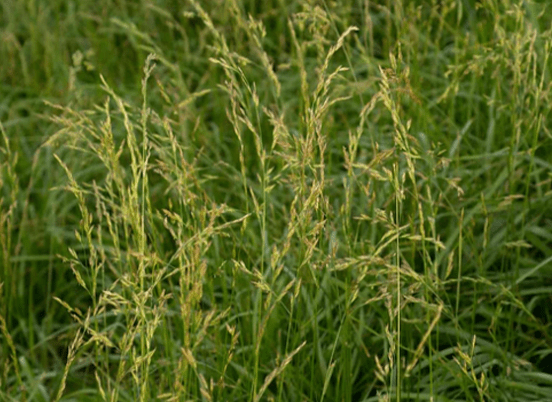
Get Fawn Tall Fescue for $1.89 per Pound
An extremely high producer designed for “tough” ground, Fawn Tall Fescue is outstanding in alkali and semi-drought areas!
(ENDOPHYTE FREE)
Our Fawn Tall Fescue is a robust, long-lived, deep-rooted bunchgrass. It is very drought-tolerant, yet it can also grow in wet conditions. Used as an addition to hay portfolios and a foundation of many pasture systems in the Midwest, Fescue has proven to be a great choice in dairy and beef operations.
- Planting Depth: 0.50″
- Planting Rates: 15 to 20 Pounds per Acre Drilled, and 20 to 25 Pounds per Acre Broadcast
- Planting Dates: Mar to May, August to September
Product ships in a 50-pound bag.
Establishment
Tall Fescue is easy to establish due to its rapid germination and good seedling vigor. Although relatively easy to establish, a good seedbed is still key to an excellent stand for hay or pastures. Fescue can be no-tilled into an existing alfalfa stand immediately after harvest. If seeding in a prepared seedbed, make sure sufficient packing has been done before and after the seed is sown. For faster establishment, 20 to 30 units of nitrogen are recommended; however, follow fertilizer plans based on soil tests.
Adaptation
Tall Fescue is adapted to cool and humid climates and most soils with a pH of 5.5 to 7.0. It will grow fairly well on soils low in fertility but is better adapted to fertile conditions. Tall Fescue will produce top growth when the soil is as cold as 40°F, and it continues growing into late fall in the south.
Management
Tall Fescue can be planted with alfalfa, with grass hay mixes, or simply for hay or pasture systems. Like most cool-season grasses, Tall Fescue stores 90% of food for regrowth after harvest in the bottom 2” to 2.5” of the stem. This means that for maximum growth and production, at least 3” to 4” of stubble should remain after harvest. Tall Fescue can tolerate less-than-ideal fertility, but, like most crops, it gives the best yield and quality in balanced soils. Tall Fescue is the best grass for stockpile grazing. Keep in mind that overgrazing should be avoided to allow for proper regrowth.
Description
The broad, flat leaves are smooth and shiny on the underside, with pronounced ribs on the upper surface. The stems are 3’ to 4’ tall, supporting a nodding panicle that is 4” to 12” long. There are approximately 227,000 seeds per pound.
Reviews
There are no reviews yet.